Sustainable Workflows
How Simplifying Your Tools Gives You Focus And Freedom
A new tool can feel like the answer, until you have a pile of them. Here's how I decide what stays, what goes, and what waits, so your business feels lighter.
Read The PostSustainable Workflows

Some weeks are just heavy. You start the week feeling ambitious. You pack in too much. Then the rest of the week happens, and your list feels like it's winning.
When you're a solopreneur running things without a team, every task lands on you. So why does your to-do list feel so overwhelming? Most of the time, the list is long, it's all in one pile, and it isn't tied to a goal. When nothing connects to anything, everything feels equally loud.
A long list asks your brain to hold a lot. David Allen, who wrote Getting Things Done, makes the point that your mind is better at having ideas than keeping track of them. Oliver Burkeman, in Four Thousand Weeks, says no one gets to everything that feels important.
The goal is to know which tasks matter this week, and why.
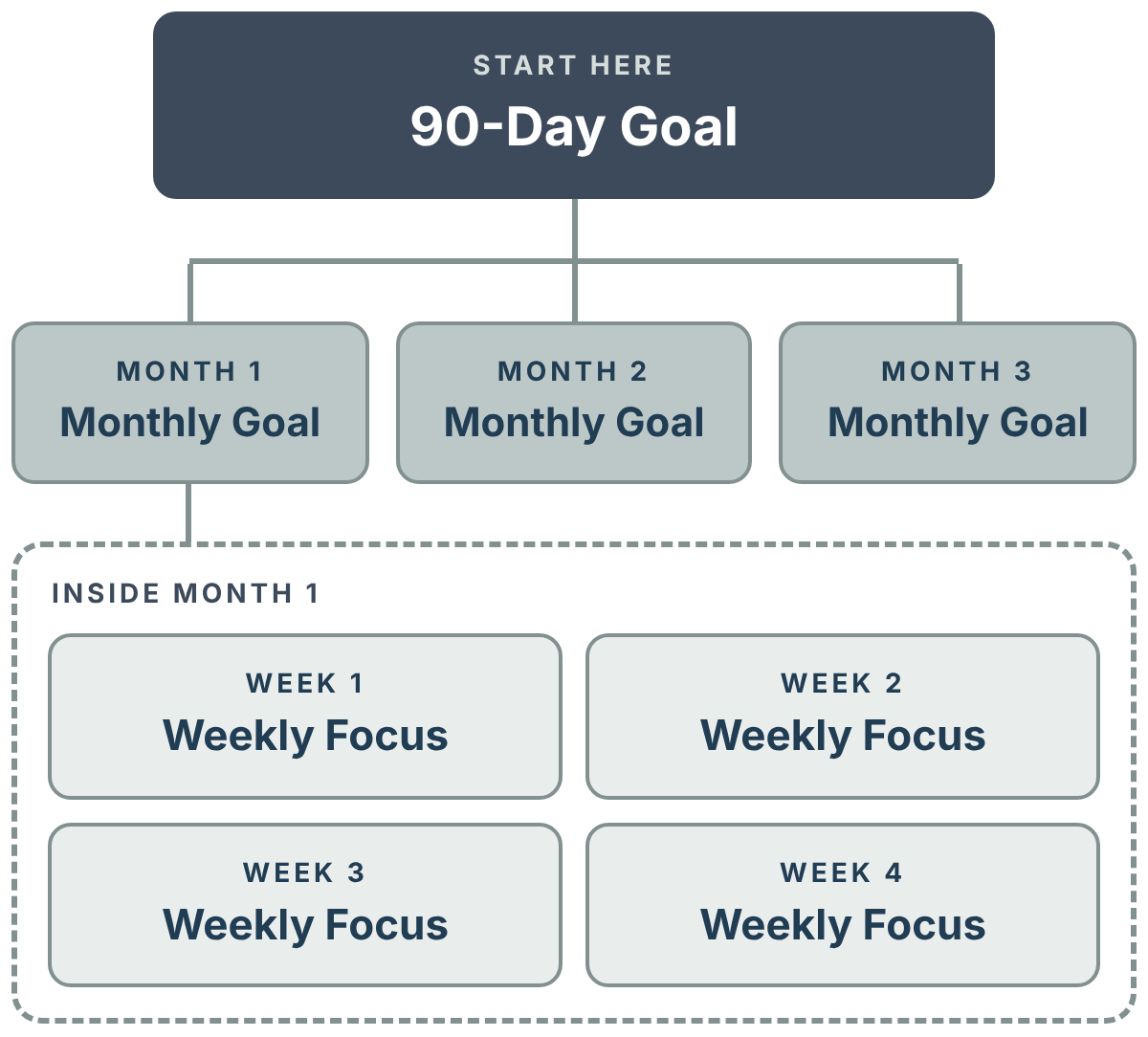
Start with a 90-day goal. I say "90-day" instead of "quarterly" because you can start on any day. You don't have to wait for January.
From there, the layers are simple. Your 90-day goal is the big result you want. Your monthly goals are milestones on the way. Your weekly focus is the small steps that move you toward the monthly goal.
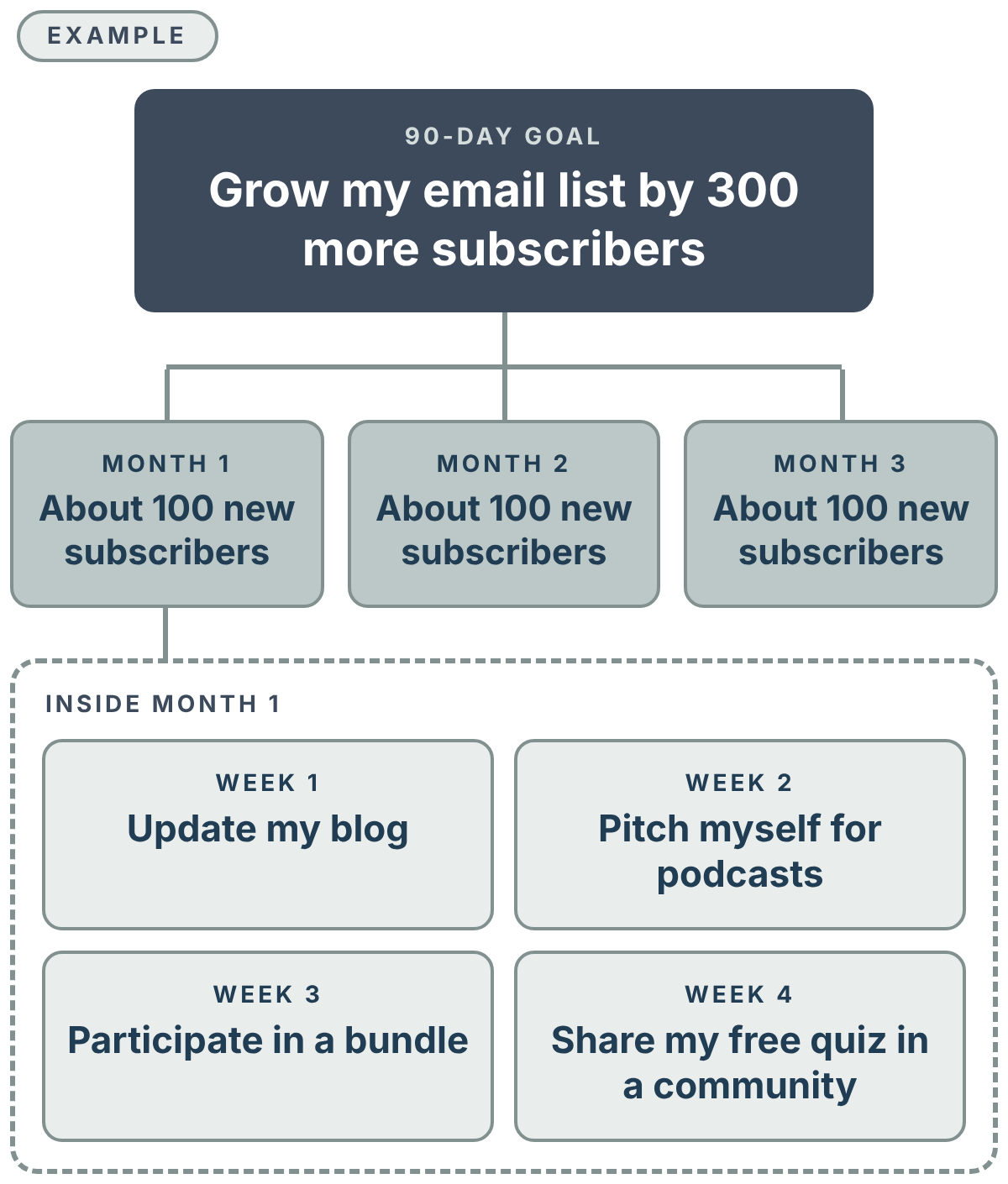
In my business, the 90-day goal is to grow my email list by 300 more subscribers. That becomes a monthly milestone of about 100 new subscribers. For month one, my weekly focus looks like this.
Goals come in different types. You might have a revenue goal, an email list goal, a client goal, or a goal about how your business runs. Pick the type that matters most right now.
Should you have one goal or a few? One is the easiest. If you want a few, pick a North Star first. A North Star is your direction and your main strategy. Once you have it, your goals and your weekly focus line up behind it. That means fewer decisions each week, and fewer decisions means less mental fatigue.
Now every task gets one question. Which goal does this help?
There are a few ways to look at your tasks.
Theme days are my favorite. Monday is content batching for me. It doesn't come naturally and it's important, so I do it first. Wednesday has no meetings, so it's my open "get it done" day. Each day already has a job, so I'm not starting from scratch.
Go back to your weekly focus. That's the minimum you committed to this week. Everything else can move.
If several tasks make up that focus, add an effort tag to each one.
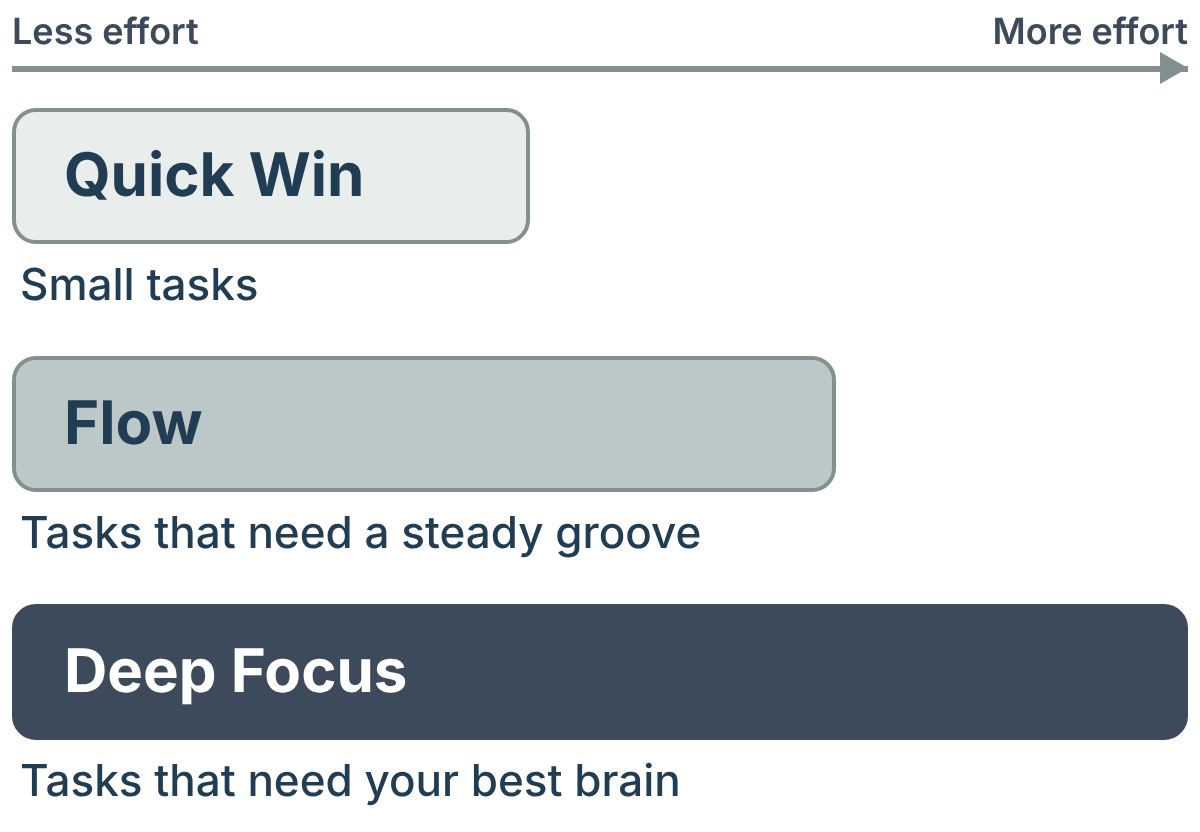
Now you're choosing between the few tasks that count.
On a low-energy day, you can lean on the plan. On a packed, noisy day, you can lean on it too. You already know where you're headed. You don't have to decide it again while three things are happening at once.
You don't need many. Look for a tool that can do a few things.
A simple planner or notes app can work if you're good at using it. A tool you'll open beats a tool with the most features. I use Notion for mine. Whatever you pick, keep your tasks in one home. Two lists means two places to worry.
Match each task to the day that fits it. The day's theme tells you what kind of work belongs there, and your calendar tells you how much room you have. A heavy meeting day gets small tasks. A wide-open day gets the Deep Focus ones.
Time blocking never worked for me. I like flexibility, so I don't give every task its own time slot. Planning the week ahead is what makes this easy. I'm not deciding every morning. I already know the plan, and I've already thought through the due dates.
I use a few checkpoints.
I'm better at details on the same day, so the daily pieces catch what I'd forget by the end of the week.
Test it for a week or two. Then look at what happened. If a tool or habit keeps getting skipped, that tells you something. If your priorities changed, your plan can change too.
Listen to your body too. If a plan only works when you push too hard, it won't last. A sustainable workflow fits your energy, and you get to shape it yourself.
Your life looks different from mine. Maybe you work full time, or maybe you're home with your kids. I've been on both sides. That's why I keep saying to think creatively and strategically about how you spend your time.
After all of that, you're probably wondering whether a calendar or a board suits you, whether tags will help, and whether a daily check-in or a weekly one fits better. You don't have to guess.
The free quiz takes a few minutes. It shows you where you naturally lean when you work, plus a few ideas to try. That's a place to start that builds on what already feels natural.
Take the free quiz and see what fits you.
Free. Takes 2 to 3 minutes, and your result comes to your inbox.
Sustainable Workflows
A new tool can feel like the answer, until you have a pile of them. Here's how I decide what stays, what goes, and what waits, so your business feels lighter.
Read The PostProductivity
Some weeks leave you wondering what you worked on. Here is my real Sunday ritual, plus how to build a weekly reset and planning ritual of your own.
Read The PostProductivity
Busy all week but not sure what moved forward? Here's how to see your progress across marketing, sales, fulfillment, and CEO work, even on scattered weeks.
Read The Post